
A study of 33 trainee learners rated the Deep Reality Viewer higher than a standard 2D monitor across teaching utility, image quality, anatomical visualisation and depth perception.
Slit lamp teaching has an age old problem. The trainee doesn’t see what the examiner sees. Departments work around it with teaching tubes and 2D monitors. A teaching tube serves one observer. A monitor serves a room, but it flattens the image, and depth is what the examination depends on.
A study published in the Canadian Journal of Ophthalmology tested the difference. 33 medical trainees observed live slit lamp examinations through the Deep Reality Viewer and through a standard 2D monitor, then rated 16 parameters.
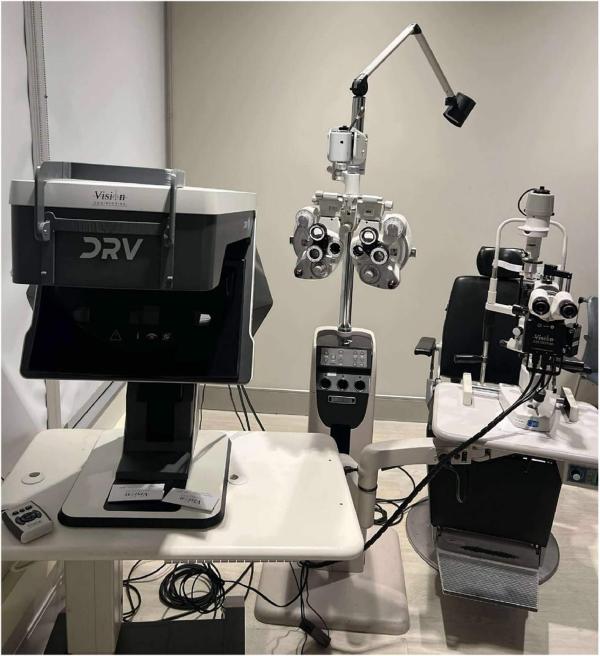
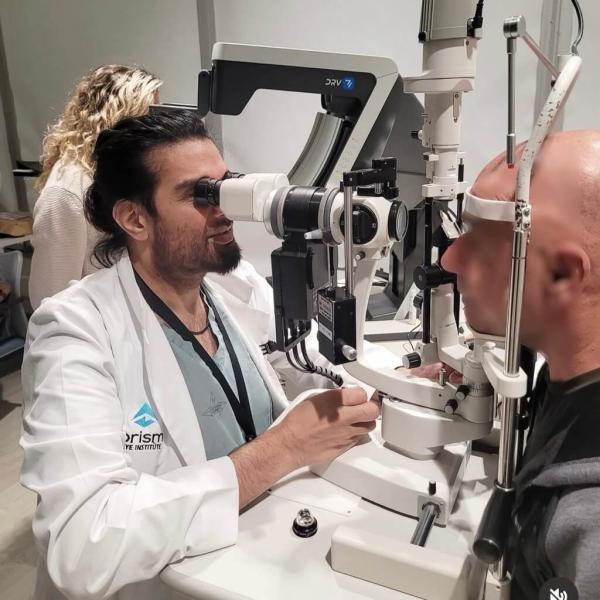
Trainees rated the DRV higher for image quality and depth perception, and judged it better suited to slit lamp teaching. Depth perception showed the largest difference of the 16 parameters tested.
The paper is open access, so you can read the full results and methodology in the journal.
Read the study in the Canadian Journal of Ophthalmology
Tran E, Padda E, Sharma RA, Ahmed IIK. Evaluation of the Deep Reality Viewer for teaching slit-lamp examination of the anterior segment and the optic nerve head. Can J Ophthalmol. Published online 2026. doi:10.1016/j.jcjo.2026.06.002